
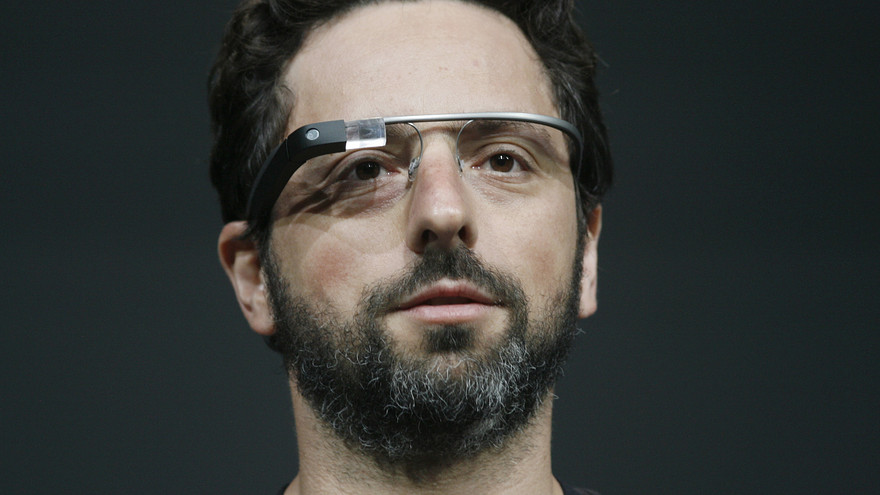
In 2013, Google Glass debuted to frenzied hype. The $1,500 “augmented reality glasses” promised to revolutionise how humans interacted with technology—but within two years, it was dead. CNET reported on a survey where 9 out of 10 Americans said they wouldn’t be caught wearing Google Glass. Critics called it creepy, useless, and tone-deaf.
The issue wasn’t technology. It was purpose. Google treated Glass like a gadget to show off, not a tool to solve a problem. Without a clear reason for wearing a computer on your face, the product stalled. It became a lesson in what happens when innovation outruns insight.
Slack took a different path. In the same year, the team abandoned a failed game and shifted focus. Not to just another chat app, but to something better. A tool that made work simpler, more human, and more productive. That clarity shaped every decision—and built a $27 billion business.
So what’s the difference?
It’s not about a glossy mission statement or a five-year plan that sounds good in a pitch deck. A real product vision is practical. It acts as your compass. It sharpens decisions, aligns the team, and keeps you focused on solving a real problem, not just shipping features for the sake of it.
The hard part is getting it right. Many teams skip the vision entirely or confuse hype with clarity. That’s how you end up chasing trends, building features no one needs, and wasting time and money with little to show for it.
In this article, we’ll break it down clearly:
- What product vision really means, and how to spot the difference between clarity and buzzwords
- Why strong vision matters, from shaping strategy to keeping your team aligned
- How to craft a vision that’s both ambitious and grounded
- What goes wrong when companies miss the mark, and how to avoid the same traps
By the end, you’ll know whether your product vision is a solid foundation or just wishful thinking. And what to do if it needs fixing.
What Is a Product Vision? (And What It’s Not)
Back in 2007, Steve Jobs didn’t stand on stage and say, “Here’s a phone with a touchscreen.” He called it “a revolutionary device that connects you to the internet, your music, and the world—in your pocket.” That was vision. It wasn’t a feature list or a revenue target. It was a future worth building—one so compelling that it reshaped entire industries.
The Anatomy of a Product Vision
Think of it like your North Star—that steady, far-off guide keeping you on course no matter how messy things get.
For a product, it’s the big, bold why. Why does this thing need to exist? And—just as important—who’s it really for?
This isn’t about next month’s to-dos or the latest feature update.
A real vision has three non-negotiables:
- It lights a fire. A great vision doesn’t just direct—it energises. Your team, stakeholders, engineers, even early adopters should feel that pull. If it doesn’t get people leaning in, it’s just words.
- Example: SpaceX’s, “make humanity multiplanetary” turns rocket engineering into a calling
- It’s long-game. We’re talking 5, maybe 10 years down the line. It’s not a roadmap; it’s the future you’re hell-bent on making real.
- Example: Tesla’s vision isn’t “sell electric cars”—it’s “accelerate the world’s transition to sustainable energy” (hence solar roofs and Powerwalls).
- Third, it’s flexible. A North Star doesn’t move, but your path might. Tech evolves. User needs pivot. A strong vision holds onto its core “why” while staying open to detours (like Slack’s pivot)
The Danger of False Visions
Many companies mistake hallucination for vision. Here are some of the common mistakes you must avoid:
What Vision Is Not:
1) Mission Statement
People confuse these two all the time—and it matters. Because while both are important, they play very different roles.
The Vision is the big picture. The bold, long-term “what if?” while Mission is the here and now—what you’re actually doing to move in that direction.
Take Ikea:
- Their vision? “To create a better everyday life for the many people”. It’s huge, timeless, and abstract.
- Their mission? “To offer a wide range of well-designed, functional home furnishing products at prices so low that as many people as possible will be able to afford them”. Now that’s grounded. That’s today’s work.
Put simply:
- Vision = why you exist
- Mission = what you’re doing about it—right now
Get those mixed up, and your strategy starts drifting. Keep them aligned, and you’ve got clarity at every level.
2) Product Roadmap:
This one trips people up a lot. Your vision is the destination—the future you’re working toward. It’s the big idea that gives your product meaning.
The roadmap is your itinerary. It’s the plan: the features you’ll build, the steps you’ll take, and the order you’ll tackle them in to bring that vision to life. One sets the direction, the other maps the path.
Think of it like this:
- Vision = “We’re going to Mars.”
- Roadmap = “First, build the rocket. Then, test the life support. Then, strap in and light the fuse.”
It’s shorter-term (12-18 months usually), hyper-tactical—but every bullet point had better ladder up to that North Star. If it doesn’t, you’re just stacking up more work.
3) Tagline
Taglines are for customers—they’re meant to catch attention and communicate value fast. Vision is for the team—it guides decisions and keeps the product focused. When companies blur the two, they end up with catchy words but a fragmented and disconnected products.
Quick check: if you removed the tagline, would your team still know what to build?
The Story Behind Sony’s “make.believe
In 2009, Sony launched “make.believe” (stylised with a dot) as its global brand platform. The tagline:
- Merged “make” (Sony’s engineering heritage) and “believe” (emotional storytelling).
- Aimed to unify Sony’s sprawling divisions (electronics, entertainment, gaming).
- Came with sleek ads featuring Sony products alongside movie characters like Spider-Man.
The Problem:
While imaginative, “make.believe” never translated to a clear product vision.
It didn’t answer:
- What should we prioritise? (Sony kept chasing trends: 3D TVs, smartphones, tablets).
- How do we differentiate? (Its Xperia phones competed on specs, not a unique experience).
Result:
Sony’s products became disjointed.
Example:
- Its Tablet P (2011) folded like a book—a gimmick without a purpose.
- Its SmartWatch (2012) launched years before Apple Watch but lacked ecosystem integration.
By 2014, Sony dropped the “make.believe” tagline as the company faced financial pressure. Then-CEO Kazuo Hirai put it plainly: “We tried to be everything to everyone.”
Lesson:
A clever tagline can’t make up for the lack of a clear product vision. Sony’s story is a reminder that PMs need a strategic north star—not just good marketing.
The “Customer Whisperer” Trap
Listening to users is crucial, but vision requires understanding the deeper need behind feature requests.
- What customers say: “I want a faster horse” (classic Henry Ford example)
- What they really need: Better transportation
- Visionary translation: Build an affordable automobile

No one was asking Apple for an iPod—they were just fed up with clunky CD players. The vision? “1,000 songs in your pocket.” It solved the real problem: music on the go.
This gets to the heart of Clayton Christensen’s “Jobs to Be Done” theory—people don’t buy products, they hire them to solve specific problems. A strong vision speaks to that deeper need, not just the surface-level request.
The Technology Blind Spot
A compelling vision must be technically possible—not just theoretically appealing. Great PMs balance “what could be” with “what can actually be built.”
- Example: Webvan’s Collapse (1999)
- Vision: “Groceries delivered in 30 minutes”
- Reality: 1999’s internet speeds, payment systems, and urban logistics couldn’t support it.
- Result: $800M bankruptcy. (The same vision worked for Instacart—15 years later, when tech caught up.)
The Silent Vision Killer: When Good Ideas Die in Darkness
Product leaders often make a fatal mistake: they treat vision like a secret rather than a rallying cry. As Melissa Perri warns: “A vision locked in a keynote deck is no vision at all.”
Why Communication Matters
A product vision’s strength depends on how well your team understands and believes in it. If engineers, designers, and marketers don’t feel the vision in their daily work, it becomes meaningless—or worse, confusing.
Consider:
- Amazon’s “Customer Obsession” isn’t just a poster—it’s the lens for every decision:
- Engineers prioritise reducing latency over flashy features
- HR evaluates hires based on customer-centric thinking
- Even CFOs tie budgets to customer experience metrics
- Contrast with Yahoo in the 2000s:
- Leadership pivoted between “portal,” “media company,” and “tech platform”
- Teams built conflicting features (Flickr vs. Tumblr vs. search)
- Result: A $100B company evaporated
Building a product vision canvas
While there’s no one-size-fits-all template, here’s a battle-tested framework I’ve used with multiple teams to craft visions that actually stick:
1. The “Why”: Core Purpose & Alignment
The fundamental reason your product exists—beyond just making money. It should tie directly to your company’s mission.
How to write it:
- Start with the customer problem, not the solution.
- Ask: “If this product disappeared tomorrow, who would miss it and why?”
Example:
Whatsapp’s: Core Purpose & Alignment
Customer Problem: Billions of people need to communicate instantly and securely with friends, family, and groups across the globe, often across borders, languages, and devices. Traditional SMS is expensive, fragmented, and insecure.
If WhatsApp Disappeared: People-especially those in international, low-cost, or privacy-sensitive contexts-would lose a trusted, simple, and private way to stay connected and manage their daily life online.
WhatsApp’s “Why”:
To let people communicate anywhere in the world without barriers-making private, secure, and effortless connection accessible to everyone, regardless of location, cost, or device.
This goes beyond “build a messaging app.” It’s about breaking down communication barriers-cost, complexity, privacy-so that anyone, anywhere, can stay close to the people and groups that matter most to them.
Instagram: Core Purpose & Alignment
- Customer Problem First: People crave ways to express themselves, share their lives, and connect with others visually, creatively, and authentically-across cultures and distances. Traditional platforms often limit self-expression or lack a sense of community.
- If Instagram Disappeared: Millions would lose a unique space to creatively share their stories, discover inspiration, and build communities around shared interests and visual storytelling.
Instagram’s “Why”:
To bring people closer together through shared experiences and visual storytelling-empowering creativity, authentic self-expression, and meaningful connections in a global community.
This is much more than “share photos online.” It’s about enabling people to express who they are, discover inspiration, and connect with others through the universal language of images.
2. The Future State: A Snapshot of Success
A vivid description of the world 2–10 years from now if your vision is fully realised.
How to write it:
- Use present tense, as if it’s already happening.
- Be specific about the impact (not just features).
Example:
- WhatsApp (2009): “SMS is obsolete. Everyone—from grandparents to remote workers—stays connected through instant, encrypted messages, voice, and video, without worrying about cost or reliability.”
- Instagram (2010): “People everywhere capture and share moments instantly, turning ordinary experiences into art. Brands and creators build communities through visuals, not text.”
Pro Tip: Avoid vague statements like “We’ll be the market leader.” Instead, paint a picture of how life is better because of your product.
3. The Problem: The Pain You’re Solving
The specific, meaningful customer problem your product addresses.
How to write it:
- Frame it as a customer struggle (e.g., “Small businesses waste 10 hours/week on manual invoicing”).
- Avoid solution language (e.g., “They need an AI-powered invoicing tool”).
Example
- Instagram: “Phone cameras are powerful, but sharing photos is clunky (email, MMS). Filters are for pros, not everyday people.”
- WhatsApp: “SMS is expensive internationally, and chat apps are fragmented (some use Skype, others BlackBerry Messenger).”
Pro Tip: Validate the problem with real user interviews and data (e.g., “SMS costs $0.25 per message in Europe”). If you can’t articulate it in one sentence, you’re not focused enough.
4. The Target Customer/Persona
Who the product is primarily for (not everyone).
How to write it:
- Be ruthlessly specific (Demographics + behaviors + psychographics)
- Avoid broad segments like “small businesses” or “millennials.”
Examples:
- Instagram’s early persona:
- *”Teens and young adults who take 10+ photos/day but find Facebook too formal.”*
- Behavior: Uses VSCO Cam, uploads to Tumblr.
- WhatsApp’s early persona:
- *”Immigrants and expats who pay $50/month for international SMS.”*
- Behavior: Uses Skype for calls but hates its chat UX.
Pro Tip: Include a behavioral trait
5. The Value Proposition: Why Customers Will Care
The compelling benefit that makes your product irreplaceable.
How to write it:
- Lead with the emotional payoff (e.g., “Feel like an artist” vs. “Upload filtered photos”).
Examples:
- Instagram: “Turn your phone into a pocket studio—edit and share stunning photos in seconds, no skills needed.”
- WhatsApp: “Text anyone, anywhere, for free. No ads, no games, just messaging that works.”
Pro Tip: Test against competitors:
“[Customer] can [benefit] by [product], unlike [alternative].”
6. Key Trends: The Waves You’re Riding
The technological, cultural, or behavioral shifts that make your vision inevitable.
How to write it:
- Name the trend and why it matters (e.g., “Remote work → demand for async collaboration tools”).
Example:
- Robinhood (2013): “Millennials distrust traditional brokers + mobile-first investing.”
- Clubhouse (2020): “Audio’s intimacy + pandemic loneliness.”
Pro Tip: If your trend is too broad, narrow downto your specific interest.
7. Major Uncertainties/Assumptions
The big leaps of faith that could make or break your vision.
How to write it:
- List hypotheses you need to validate
Examples:
- Instagram:
- “Will people care about photo filters?”
- “Can we grow without a desktop version?”
- WhatsApp:
- “Will users trust a no-frills app over branded alternatives (e.g., iMessage)?”
- “Can we monetise without ads?”
Pro Tip: Rank by risk vs opportunity: “If X isn’t true, our business model collapses.” check out my the value hypothesis test artical for more tips.
8. Portfolio Fit: Strategic Role
How this product complements or disrupts your company’s other offerings.
How to write it:
- Explain synergies (e.g., “Expands our SMB suite”) or strategic bets (e.g., “Enters a $10B adjacent market”).
Examples:
- Instagram (Pre-Facebook Acquisition):
- “A mobile-first complement to Facebook’s desktop-heavy experience.”
- WhatsApp (Post-Facebook Acquisition):
- “Facebook’s utility player for private communication (vs. Facebook’s public sharing).”
Pro Tip: If your product doesn’t clearly enhance the portfolio, ask: Are we diverging for a good reason?
9. Team & Resources: The Right People to Execute the Vision
A brutally honest assessment of whether your team has the skills, culture, and resources to bring the vision to life.
Why it matters:
- A visionary product with the wrong team will fail (e.g., Google+ had resources but lacked social DNA).
- Conversely, small but focused teams can punch above their weight (e.g., WhatsApp’s 50-person team serving 1B+ users).
How to Assess Your Team’s Fit
1. Skills Gap Analysis
- Ask: “Do we have the technical/design/domain expertise to build this?”
- Instagram (2010): Needed mobile-first designers (hired from Apple/Twitter) and infrastructure engineers to handle photo uploads at scale.
- WhatsApp (2009): Needed backend experts in real-time messaging (ex-Yahoo! engineers).
2. Cultural Alignment
- Ask: “Does our team genuinely care about this vision?”
- Example: Instagram’s early team was full of photography enthusiasts.
3. Resource Realities
- Ask: “Can we execute this with an X budget/people?”
- Instagram: Leveraged AWS to scale cheaply.
- WhatsApp: Avoided costly servers by using Erlang for efficiency.
4. Leadership Buy-In
- Ask: “Will execs understand the long-term bet?”
- Example: Facebook’s acquisition of Instagram succeeded because Zuckerberg gave it autonomy.
- Counter-example: Yahoo’s mismanagement of Flickr eroded its vision.
Great Books to Read:
- Lean UX (Jeff Gothelf) – Validating assumptions.
- Hooked (Nir Eyal) – Building habit-forming products.